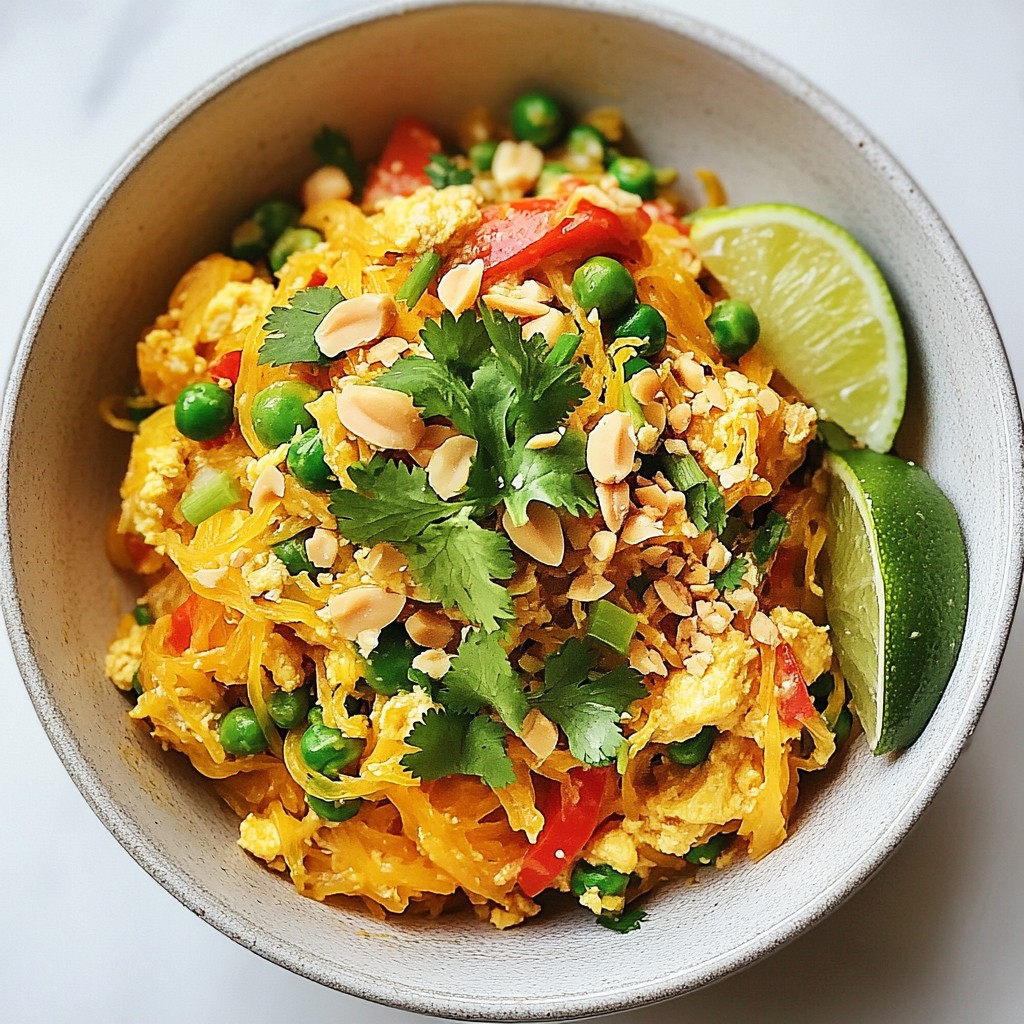
Looking for a fun, healthy twist on classic Pad Thai? Try my Spaghetti Squash Pad Thai! This dish offers the same bold flavors, but swaps traditional noodles for spaghetti squash, keeping it light and low-carb. With fresh veggies and a tasty sauce, it’s a quick meal that’s perfect for any night. Dive into this recipe to enjoy a delicious and guilt-free dinner that everyone will love!
Why I Love This Recipe
- Healthy Alternative: This recipe offers a nutritious twist on traditional Pad Thai by using spaghetti squash instead of noodles, making it lower in carbs and calories.
- Quick and Easy: With a total prep time of just 15 minutes, this dish is perfect for busy weeknight dinners without sacrificing flavor.
- Flavor Explosion: The combination of peanut butter, lime juice, and sesame oil creates a deliciously rich and tangy sauce that elevates the dish.
- Customizable: Feel free to add your favorite veggies or protein, such as shrimp or chicken, to make this dish your own!
Ingredients
List of Ingredients
- Spaghetti squash
- Sesame oil
- Garlic
- Onion
- Red bell pepper
- Snap peas
- Eggs
- Peanut butter
- Soy sauce
- Lime juice
- Brown sugar
- Chopped peanuts
- Green onions
- Fresh cilantro
- Lime wedges
- Salt and pepper
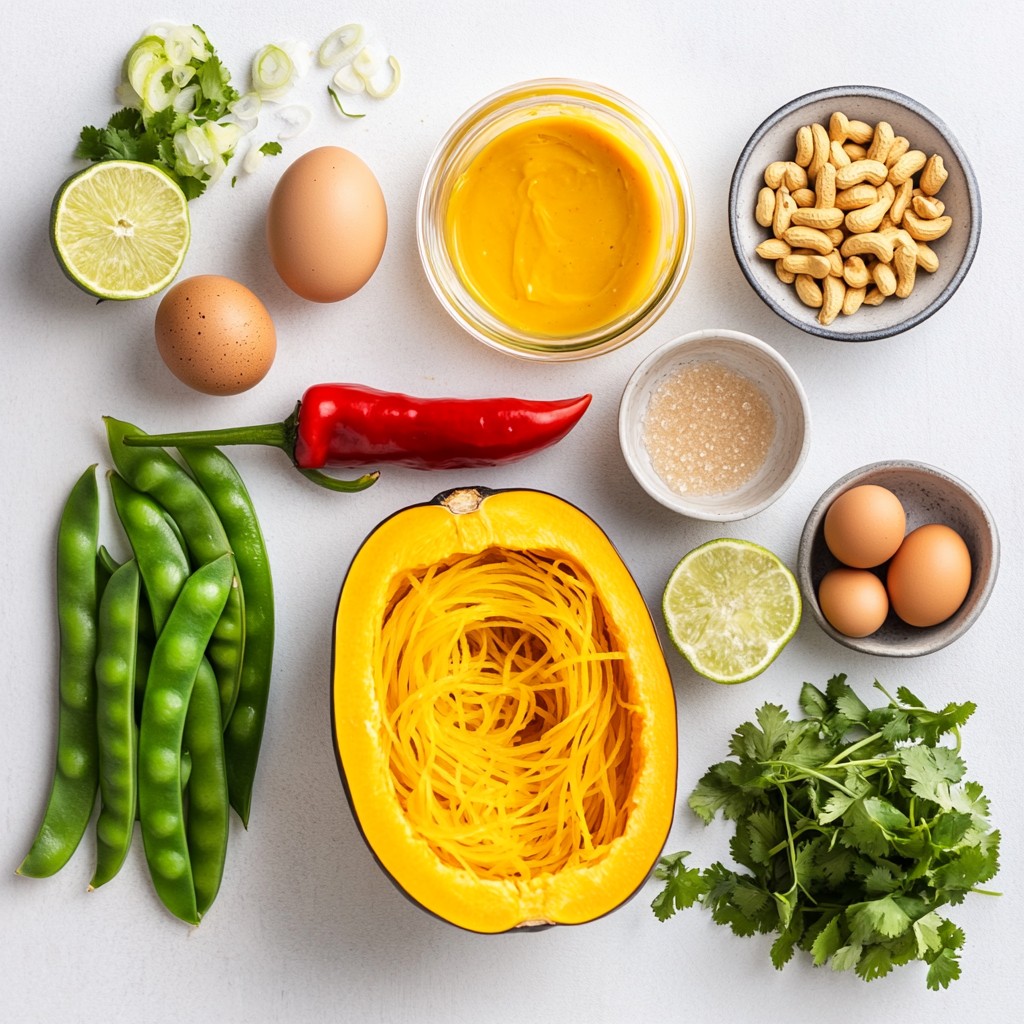
Spaghetti squash is a star in this dish. It has a mild taste and a fun texture. You can enjoy it without feeling heavy. Sesame oil adds a nutty flavor and richness. Garlic and onion provide warmth and depth. The red bell pepper brings sweetness. Snap peas add a nice crunch to each bite.
For protein, we use eggs. They add creaminess and help bind the dish. Peanut butter gives a creamy texture and a lovely nutty taste. Soy sauce adds saltiness and umami. Lime juice brightens the dish and balances flavors. Brown sugar adds a hint of sweetness, rounding out the taste.
To finish, we sprinkle chopped peanuts for crunch and flavor. Green onions and fresh cilantro add freshness. Lime wedges serve as a zesty garnish. Salt and pepper enhance all the flavors. Each ingredient plays a key role in creating a tasty and healthy meal.
Step-by-Step Instructions
Preparing the Spaghetti Squash
First, preheat your oven to 400°F (200°C). Cut the spaghetti squash in half lengthwise. Scoop out the seeds with a spoon. Place the squash cut-side down on a baking sheet lined with parchment paper. Roast it for 30 to 40 minutes or until it is tender. Once cooked, use a fork to scrape the flesh into spaghetti-like strands. Set those strands aside for later.
Sautéing Aromatics
Next, heat 2 tablespoons of sesame oil in a large skillet over medium heat. Add 3 minced cloves of garlic and 1 thinly sliced small onion. Sauté them for about 2 minutes, until they smell great. This step builds a strong base for your dish.
Adding Vegetables
Now, stir in 1 thinly sliced red bell pepper and 1 cup of trimmed snap peas. Cook them for 3 to 4 minutes. You want them to be tender but still crisp. This adds color and crunch to your Pad Thai.
Cooking the Eggs
Push the vegetable mix to one side of the skillet. Pour in 2 large beaten eggs on the other side. Scramble the eggs until fully cooked. Once done, mix everything together in the skillet. This adds protein and richness to your dish.
Making the Sauce
In a small bowl, whisk together 3 tablespoons of peanut butter, 2 tablespoons of soy sauce, 2 tablespoons of lime juice, and 1 tablespoon of brown sugar. Make sure it is smooth. Pour this sauce over the cooked vegetables and eggs. Mix well to combine all the flavors.
Incorporating Spaghetti Squash
Gently fold in the cooked spaghetti squash strands. Toss everything together to make sure the squash is fully coated in the sauce. Season with salt and pepper to taste. This step brings all the elements together into one delicious dish.
Serving the Dish
Remove the skillet from heat. Top your Pad Thai with 1/4 cup of chopped peanuts, 2 sliced green onions, and fresh cilantro. Serve with lime wedges on the side for squeezing over the dish. This adds a fresh touch and brightens the flavors.
Tips & Tricks
Cooking Tips
- To ensure the squash is tender, roast it at 400°F for 30-40 minutes.
- Check for doneness by piercing it with a fork. It should feel soft.
- For perfectly scrambling eggs, heat the skillet first before adding them.
- Stir gently to create soft curds, and mix them with the veggies quickly.
Garnishing Suggestions
- Add chopped cilantro and green onions for a fresh taste.
- Sprinkle extra peanuts on top for crunch.
- Serve in vibrant bowls for a fun look. Lime wedges add a pop of color.
Making it Low-Carb or Gluten-Free
- Use tamari instead of soy sauce for a gluten-free option.
- Swap out brown sugar for coconut sugar to keep it low-carb.
- You can use vegetables like zucchini noodles for a lighter dish.
Pro Tips
- Choose the Right Squash: Look for a spaghetti squash that feels heavy for its size and has a smooth, yellow skin. This indicates ripeness and better flavor.
- Make Ahead: You can roast the spaghetti squash a day in advance. Store it in an airtight container in the refrigerator to save time on busy days.
- Customize the Veggies: Feel free to add or substitute any of your favorite vegetables such as carrots, zucchini, or broccoli to enhance the dish's nutrition and flavor.
- Perfect the Sauce: Adjust the sweetness and acidity of the sauce to your taste. If you prefer more tang, add a touch more lime juice or if you like it sweeter, increase the brown sugar.
Variations
Vegan Spaghetti Squash Pad Thai
To make a vegan version, skip the eggs. You can use tofu or a chickpea scramble. Both options offer great texture and protein. Tofu adds a hearty bite, while chickpeas boost fiber. Cook the tofu until golden for extra flavor. For chickpeas, mash them lightly and cook until warm.
Additional Protein Options
If you want more protein, add shrimp or chicken. Cook shrimp until pink, about 3-4 minutes. For chicken, slice it thin and cook until no longer pink. Adjust cooking times based on the protein you choose. This way, your dish remains tasty and safe to eat.
Flavor Enhancements
You can change the flavor by adding different vegetables. Try bok choy, carrots, or zucchini for variety. Each vegetable brings its own taste and texture. For extra heat, add chili flakes or sriracha. This gives your Pad Thai a spicy kick that many love.
Storage Info
Storing Leftovers
To keep your Spaghetti Squash Pad Thai fresh, follow these tips:
- Refrigeration: Place leftovers in an airtight container.
- Storage time: Eat within 3-4 days for best taste.
Reheating Instructions
To warm up your leftovers without losing texture, try these methods:
- Microwave: Heat in short bursts, about 1-2 minutes. Stir in between to warm evenly.
- Skillet: Use low heat. Add a splash of water to keep moisture. Heat for 5-7 minutes, stirring often.
Freezing for Future Meals
If you want to save some for later, here’s how to freeze:
- Freezing: Cool the dish completely, then place it in a freezer-safe container.
- Storage time: It lasts up to 2-3 months in the freezer.
- Thawing: Move it to the fridge overnight before reheating.
- Reheating: Use the microwave or skillet as mentioned above. Enjoy your meal!
FAQs
What is spaghetti squash, and how is it different from regular pasta?
Spaghetti squash is a unique vegetable. When cooked, its flesh becomes stringy, like spaghetti. This makes it a great low-carb option for pasta dishes. Unlike regular pasta, which is made from grains, spaghetti squash is a whole food. It provides fiber, vitamins, and minerals. It’s an excellent choice for those who want to cut carbs or eat more veggies.
Can I use peanut butter alternatives in this recipe?
Yes, you can use alternatives to peanut butter. Almond butter or sunflower seed butter works great, too. These options still give that creamy texture and flavor. If you need a nut-free dish, sunflower seed butter is a perfect choice. Just make sure to adjust the taste as needed since each nut butter has its own flavor.
How can I make Spaghetti Squash Pad Thai spicier?
To add spice, consider using chili flakes or sriracha. You can mix these into the sauce before adding it to the dish. Another option is to add sliced fresh chili peppers during the cooking process. This way, you can control the heat level to suit your taste. Just remember, start small, and you can always add more!
Is this recipe suitable for meal prep?
This recipe is great for meal prep! You can cook the spaghetti squash and veggies in advance. Store them in airtight containers in the fridge. Just reheat everything when you’re ready to eat. It tastes just as good the next day. Plus, you can enjoy it for lunch or dinner throughout the week.
How can I ensure my spaghetti squash is cooked perfectly?
To cook spaghetti squash perfectly, roast it at 400°F (200°C) for 30-40 minutes. Cut it in half and scoop out the seeds first. Cooking time may vary based on size, so check for tenderness. When it’s done, the flesh should easily pull apart into strands with a fork. This means it’s ready for your Pad Thai.
Can I use other vegetables in this Pad Thai?
Absolutely! You can customize the dish with your favorite vegetables. Broccoli, carrots, or zucchini work well. You can even add mushrooms for extra flavor. Just make sure to cut them into thin strips to cook evenly. Experimenting with different veggies can give your Pad Thai new flavors and textures.
This recipe shows how to make a tasty Spaghetti Squash Pad Thai. You learned the steps, from roasting the squash to mixing in fresh veggies and a flavorful sauce. Remember, you can customize it to fit your diet or add proteins. Enjoy leftovers the right way and store them for future meals. With these tips, you are ready to create an easy, nutritious dish. Try it out and impress your family and friends!