
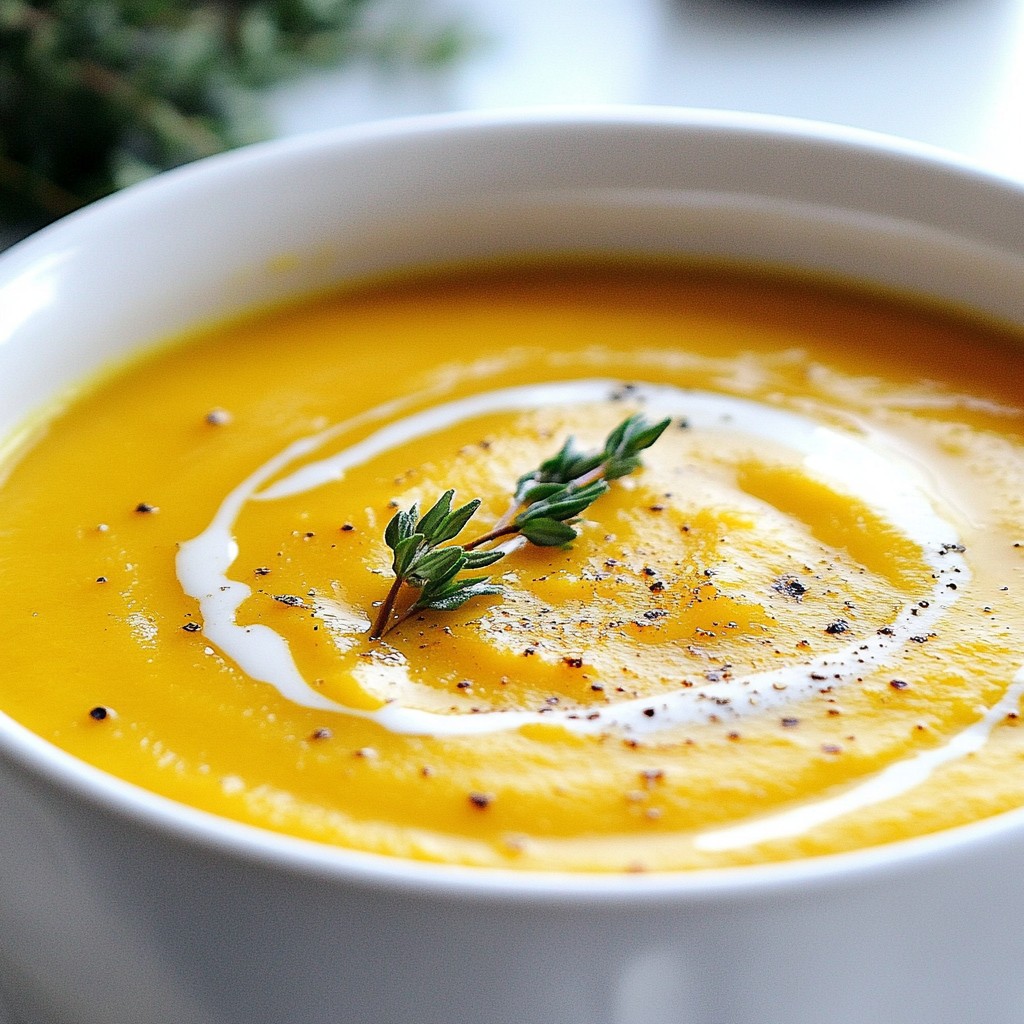
Warm up your cozy days with my Roasted Butternut Squash Soup. This dish is a true comfort to your soul. With simple, tasty ingredients like squash, onion, and garlic, every spoonful feels rich and satisfying. You’ll learn how to elevate your soup with spices and creamy coconut milk. Ready to create a bowl of pure joy? Let’s get cooking!
Why I Love This Recipe
- Comforting Flavor: This soup delivers a warm and cozy experience with its rich, creamy texture and the natural sweetness of roasted butternut squash.
- Easy to Make: With simple ingredients and straightforward steps, this recipe can be prepared quickly, making it perfect for weeknight dinners.
- Healthy Ingredients: Packed with nutrients, butternut squash is low in calories and high in vitamins, making this soup a wholesome choice for a healthy diet.
- Customizable: You can easily adjust the spices or add other vegetables to suit your taste, making it versatile for any palate.
Ingredients
Main Ingredients
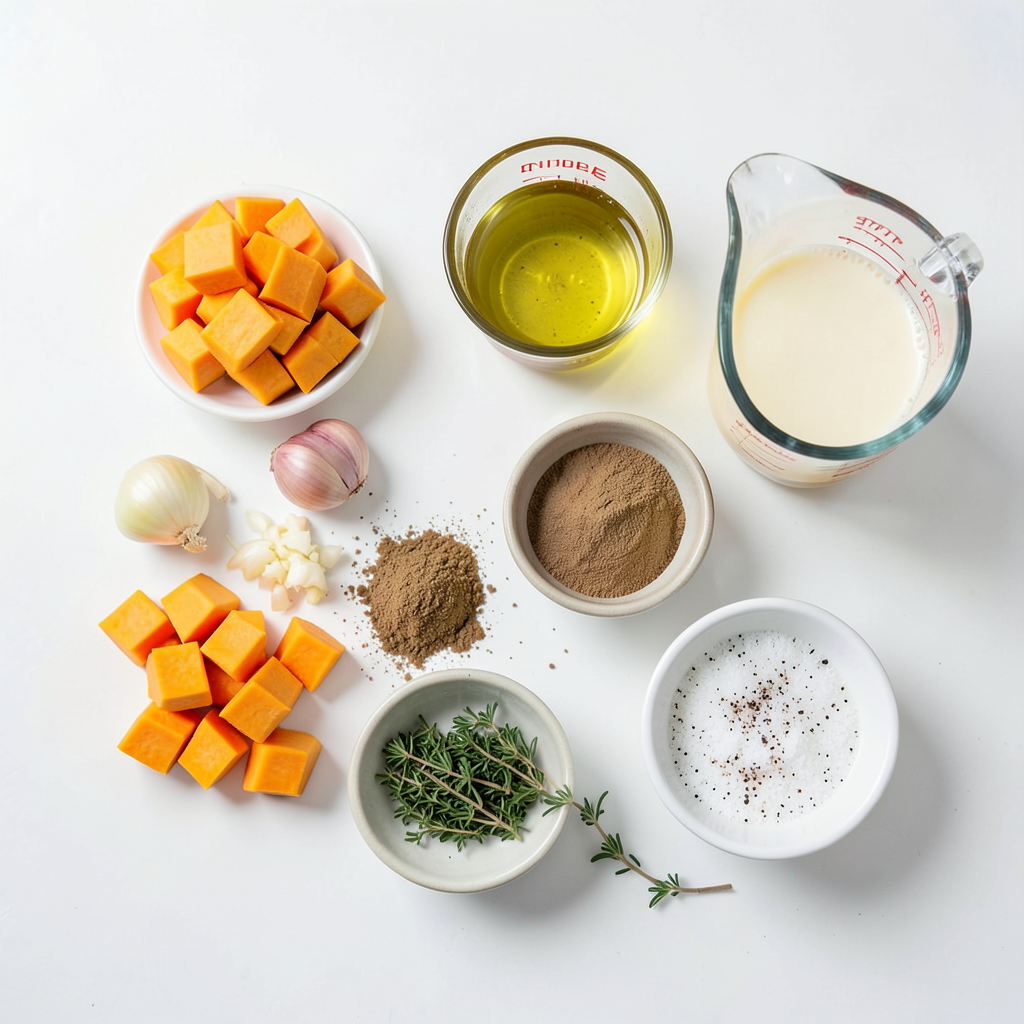
- 1 medium butternut squash, peeled and diced
- 1 medium onion, chopped
- 3 cloves garlic, minced
The main stars of this soup are butternut squash, onion, and garlic. Butternut squash gives this dish its warm, sweet flavor. It is rich in vitamins and adds a creamy texture. The onion adds depth, while garlic brings a lovely aroma.
Flavor Enhancers
- 2 tablespoons olive oil
- 1 teaspoon ground cumin
- 1/2 teaspoon cinnamon
To boost the flavors, I use olive oil, cumin, and cinnamon. Olive oil helps roast the veggies and adds richness. Ground cumin gives a warm, earthy note, and cinnamon adds a subtle sweetness that rounds out the dish.
Base and Creaminess
- 4 cups vegetable broth
- 1 cup coconut milk
- Salt and pepper to taste
For the base, I use vegetable broth and coconut milk. The broth adds a savory flavor, while the coconut milk makes the soup creamy and rich. I finish with salt and pepper for the perfect seasoning.
Step-by-Step Instructions
Preparation Steps
1. Preheat your oven to 400°F (200°C). This heat will help the squash cook well.
2. In a large bowl, toss together:
- 1 medium butternut squash, peeled and diced
- 1 medium onion, chopped
- 3 cloves garlic, minced
- 2 tablespoons olive oil
- 1 teaspoon ground cumin
- 1/2 teaspoon cinnamon
- Salt and pepper to taste
Make sure all the pieces are covered in oil and spices.
Roasting Process
3. Spread the seasoned mixture on a baking sheet in a single layer. This helps them roast evenly.
4. Roast in the oven for about 25-30 minutes. Check if the squash is tender and caramelized.
5. Once done, remove the baking sheet and let it cool for a few minutes. Cooling makes it easier to handle.
Cooking and Blending
6. Transfer the roasted veggies to a large pot. Add 4 cups of vegetable broth. Bring it to a simmer over medium heat. Let it cook for 5 more minutes.
7. Remove from heat and blend the soup. You can use an immersion blender for smoothness. If you use a countertop blender, blend in small batches. Be careful of the steam!
8. Stir in 1 cup of coconut milk. Taste and add more salt and pepper if needed. Warm the soup gently over low heat. Serve it hot, garnished with fresh thyme leaves.
Tips & Tricks
Best Practices for Roasting
To get the best flavor from your butternut squash, caramelization is key. This occurs when the natural sugars in the squash cook and turn brown. Here are tips to achieve this:
- Use high heat: Roasting at 400°F (200°C) gives great color.
- Space it out: Place the squash in a single layer on the baking sheet. This helps it roast, not steam.
- Don't crowd: If the pan is full, the squash will get mushy. Use two sheets if needed.
To avoid mushiness, keep an eye on the time. Roast for 25-30 minutes until tender. If you have larger pieces, check for doneness early.
Blending Techniques
When it’s time to blend, you have options. An immersion blender is easy to use right in the pot. Just be careful of splashes. If you use a countertop blender, blend in batches. Hot liquids can cause pressure build-up. Here are safety tips:
- Let it cool: Allow the soup to cool for a few minutes before blending.
- Vent the lid: If using a countertop blender, remove the center cap to let steam escape.
Flavor Adjustments
You can customize the flavor of your soup with ease. Start by adjusting the seasoning. Taste the soup after blending. Add more salt or pepper if it needs a boost.
For extra depth, consider adding herbs. Fresh thyme is great, but you can also try:
- Sage: Adds a warm, earthy note.
- Rosemary: Offers a fragrant touch.
- Parsley: Brightens up the flavor.
These small changes can make your soup truly unique. Enjoy experimenting!
Pro Tips
- Choose the Right Squash: Opt for a medium-sized butternut squash that feels heavy for its size. This ensures a sweeter flavor and better texture.
- Roasting Technique: Make sure to spread the squash and onions out in a single layer on the baking sheet to achieve even caramelization.
- Blending Tips: If using a countertop blender, allow the soup to cool slightly before blending to avoid steam explosions. Blend in batches if necessary.
- Seasoning Adjustments: Taste the soup after adding the coconut milk, as this can mellow the flavors. Adjust with additional spices or salt to suit your preference.
Variations
Flavor Profile Changes
You can change the flavor of your soup with spices. Add nutmeg for warmth or cayenne for heat. You can also swap in pumpkin or sweet potato. Each choice brings a new taste. Try roasted garlic for a richer flavor.
Dietary Adjustments
This soup is easy to make vegan and gluten-free. Just use vegetable broth and coconut milk, as shown in the recipe. If you need it nut-free, skip the coconut milk. Use oat milk or soy milk instead for creaminess.
Serving Suggestions
I love to serve this soup with crusty bread or crunchy croutons. They add great texture. For garnishes, fresh thyme gives a nice touch. You could also sprinkle some pumpkin seeds for crunch. Enjoy your soup warm for the best flavor!
Storage Info
Refrigeration
To store leftovers of your roasted butternut squash soup, let it cool first. Then, place it in a container with a tight lid. I recommend using glass or BPA-free plastic containers. This keeps the soup fresh and safe. Your soup will last in the fridge for about 4 to 5 days.
Freezing
If you want to save your soup for later, freezing is a great option. Use freezer-safe containers or heavy-duty freezer bags. Make sure to leave some space at the top of the container. This allows the soup to expand as it freezes. You can freeze the soup for up to 3 months. When you’re ready to enjoy it, thaw it in the fridge overnight for best results.
Reheating Tips
When reheating, do it slowly to help keep the soup's texture. The best methods are on the stove or in the microwave. If using the stove, warm it over low heat. Stir often to avoid hot spots. In the microwave, use a microwave-safe bowl and heat in short bursts. This way, you can check the soup's warmth. Always taste it again and adjust seasoning if needed.
FAQs
Can I use frozen butternut squash?
Yes, you can use frozen butternut squash. Frozen squash is often pre-cut and ready to use. It saves time in the kitchen. However, fresh squash has its benefits too. Fresh squash has a better texture and flavor. When using frozen squash, it may have more water. This can make your soup thinner. If you use frozen, adjust the broth amount to get the right thickness.
How do I make the soup spicier?
To add heat, you have several options. You can mix in cayenne pepper or red pepper flakes. These spices give a nice kick without changing the flavor. Another option is to add fresh jalapeños or serrano peppers. Just chop them finely and cook them with the onions and garlic. This adds warmth and depth to the soup.
What can I substitute for coconut milk?
If you need a substitute for coconut milk, there are many options. Almond milk or cashew milk works well for a nutty flavor. For a creamier option, try heavy cream or sour cream. If you want to keep it dairy-free, use oat milk. Each option gives a different taste, so pick what fits your diet best.
This post explored how to make a delicious butternut squash soup. We covered key ingredients like squash, onion, garlic, and some flavor boosters. You learned about the roasting process, blending tips, and ways to customize the soup to fit your taste.
In conclusion, this soup is tasty and easy to make. With some simple steps, you can enjoy a warm bowl. Keep experimenting with flavors and ingredients to find your perfect mix. Your kitchen will thank you!