Looking to spice up your dinner routine? Korean Beef Bulgogi Bowls combine tender marinated beef with fresh veggies for a meal that's both flavorful and easy to make. In this guide, I'll walk you through simple steps and share handy tips, so you can enjoy this classic dish at home. Get ready to impress your taste buds without breaking a sweat in the kitchen!
Why I Love This Recipe
- Flavor Explosion: The combination of soy sauce, sesame oil, and gochujang creates a rich and savory flavor that is utterly addictive.
- Quick and Easy: Marinating the beef takes minimal time, and cooking it all in one skillet makes cleanup a breeze.
- Customizable: You can easily swap in your favorite vegetables or adjust the spice level to suit your taste.
- Healthy and Wholesome: This dish is packed with colorful veggies, lean protein, and served over fluffy jasmine rice for a balanced meal.
Ingredients
Main Ingredients for Korean Beef Bulgogi Bowls
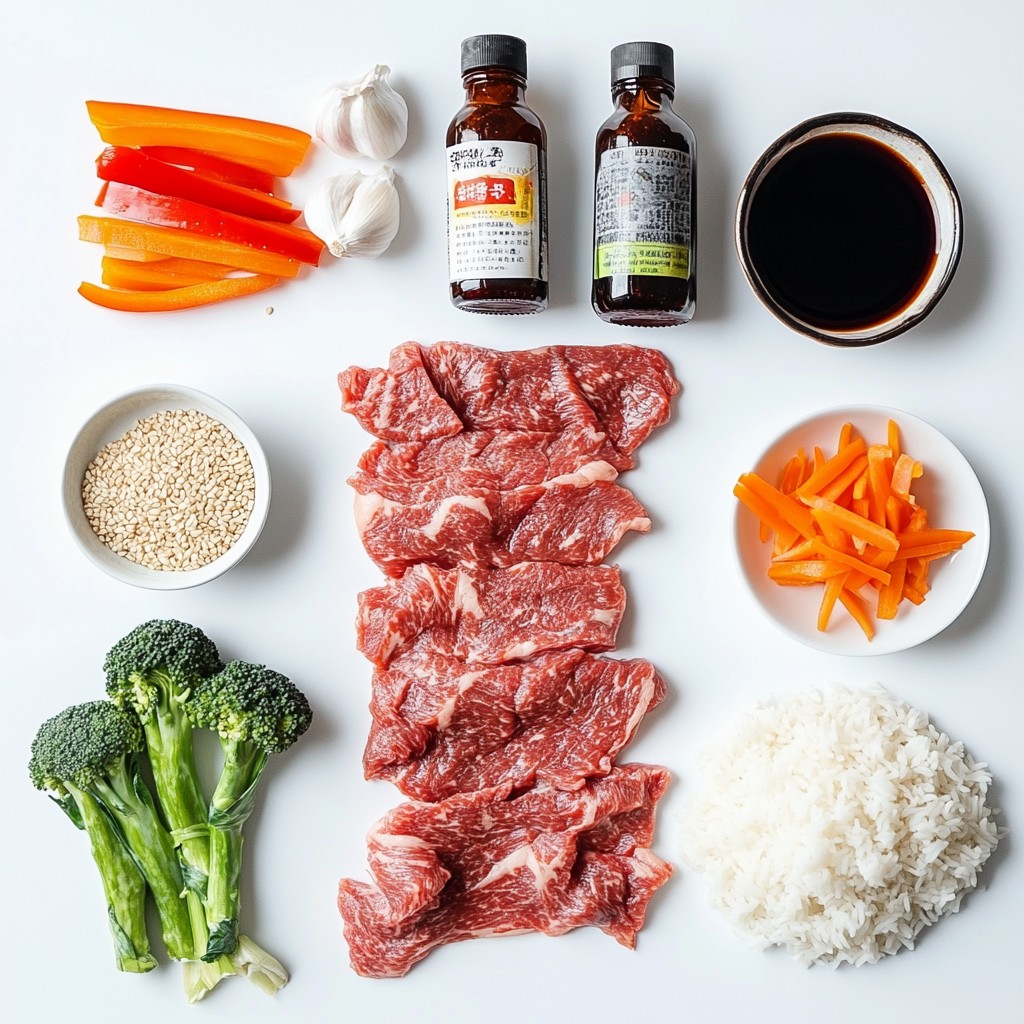
For Korean Beef Bulgogi Bowls, you need some key ingredients. Here’s what you will use:
- 1 pound beef sirloin, thinly sliced
- 1/4 cup soy sauce
- 2 tablespoons brown sugar
- 1 tablespoon sesame oil
- 4 cloves garlic, minced
- 1 inch ginger, minced
- 1 tablespoon gochujang (Korean chili paste)
- 1 tablespoon rice vinegar
- 1 teaspoon black pepper
- 1 cup cooked jasmine rice
- 1 cup broccoli florets
- 1 carrot, julienned
- 1 red bell pepper, sliced
- 2 green onions, chopped
- Sesame seeds for garnish
These ingredients create a mix of flavors that make this dish shine.
Pantry Staples Required
Most of these items might already be in your kitchen. Here are the pantry staples you will need:
- Soy sauce
- Brown sugar
- Sesame oil
- Gochujang
- Rice vinegar
- Black pepper
These ingredients help you make the perfect marinade for the beef.
Optional Ingredients for Extra Flavor
If you want to add more taste, consider these optional ingredients:
- Lime wedges for serving
- Extra vegetables like snap peas or mushrooms
- Sriracha for a spicy kick
Adding these options can make your meal even more enjoyable. Experiment with flavors to find what you love!
Step-by-Step Instructions
Preparing the Marinade
To start, grab a large bowl. In it, mix together the following ingredients:
- 1/4 cup soy sauce
- 2 tablespoons brown sugar
- 1 tablespoon sesame oil
- 4 cloves garlic, minced
- 1 inch ginger, minced
- 1 tablespoon gochujang
- 1 tablespoon rice vinegar
- 1 teaspoon black pepper
Whisk everything together until it blends well. This mix gives the beef its great taste.
Marinating the Beef
Next, take 1 pound of thinly sliced beef sirloin. Add it to the marinade. Stir well to coat each piece. This step is key for flavor. Let it sit for at least 30 minutes at room temperature. If you want deeper flavor, marinate for up to 2 hours in the fridge.
Cooking the Beef and Vegetables
While the beef marinates, steam 1 cup of broccoli florets for about 5 minutes. The broccoli should be tender but still bright green. Set it aside.
Now, heat a large skillet over medium-high heat. Add the marinated beef in a single layer. Cook for about 3-4 minutes. Stir often until the beef is brown and cooked through.
After the beef is ready, add in 1 julienned carrot and 1 sliced red bell pepper. Sauté them for about 2-3 minutes. They should soften but still keep their crunch.
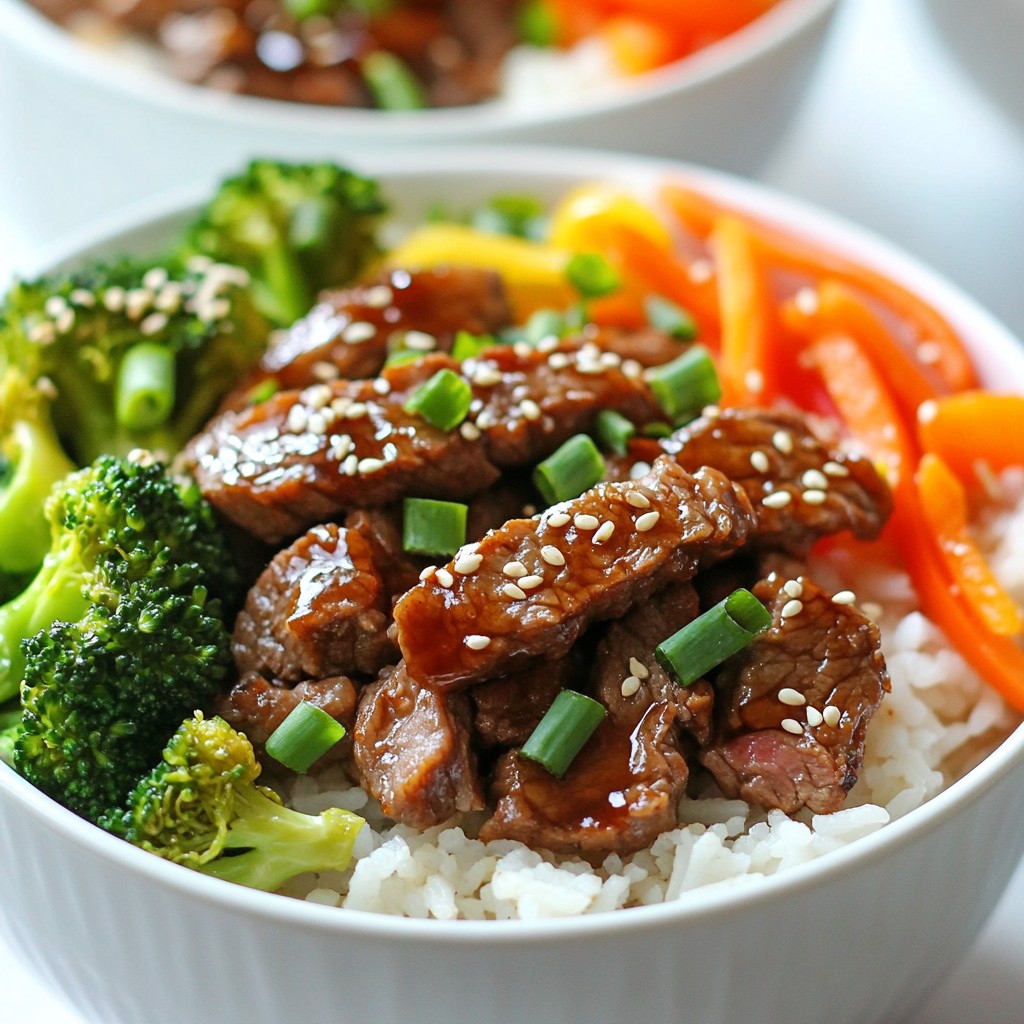
To serve, place a scoop of cooked jasmine rice at the bottom of each bowl. Top it with the bulgogi beef, steamed broccoli, and sautéed veggies. Finally, sprinkle chopped green onions and sesame seeds on top for a lovely finish. Enjoy your colorful and tasty meal!
Tips & Tricks
How to Achieve the Best Flavor
To get the best flavor from your bulgogi, focus on the marinade. Use fresh garlic and ginger for a bright taste. The longer you marinate the beef, the more flavor it absorbs. Aim for at least 30 minutes, but 2 hours is even better. Gochujang adds a spicy kick. Adjust the amount based on your taste. A touch of sesame oil adds richness, balancing the flavors perfectly.
Recommended Cooking Methods
I recommend using a large skillet for cooking your beef. A cast-iron skillet works great, too. Heat it over medium-high heat before adding the beef. This helps it brown nicely. Make sure not to overcrowd the pan; cook in batches if needed. This way, the beef gets a nice sear. After cooking the beef, quickly sauté your veggies in the same pan. This keeps the flavor and saves on cleanup.
Serving Suggestions for Presentation
For a beautiful presentation, use colorful bowls. Start with a scoop of jasmine rice at the bottom. Layer the cooked bulgogi beef on top, followed by the steamed broccoli and sautéed veggies. Sprinkle chopped green onions and sesame seeds for a pop of color. Add lime wedges on the side for an extra zesty touch. The bright colors will make your dish look as good as it tastes!
Pro Tips
- Marination Magic: For even more flavor, marinate the beef overnight in the refrigerator. This allows the meat to absorb the marinade fully, resulting in a richer taste.
- Vegetable Variety: Feel free to add other vegetables like snap peas or mushrooms for added texture and nutrition. Just ensure they are cut into similar sizes for even cooking.
- Perfect Rice: For the best jasmine rice, rinse it under cold water until the water runs clear. This removes excess starch, preventing the rice from becoming gummy when cooked.
- Garnish Game: Don't skip the sesame seeds and green onions! They not only add visual appeal but also enhance the dish's flavor and texture.
Variations
Substitutions for Different Proteins
You can swap beef for other meats. Chicken, pork, or tofu work well. For chicken, use boneless thighs or breasts. Slice them thin like the beef. For pork, try pork tenderloin. Tofu is a great choice for a plant-based meal. Use firm tofu and press it to remove water. Marinating time stays the same for all proteins.
Vegetarian and Vegan Options
To make this dish vegetarian or vegan, skip the meat. Use mushrooms for a savory taste. Shiitake or portobello mushrooms are excellent choices. You can also use tempeh or seitan. Both are protein-rich and absorb flavors well. Marinate them just like you would the beef. These options keep the dish hearty and delicious.
Alternate Vegetable Combinations
Feel free to mix up the veggies in your bowl. Snap peas, zucchini, or baby corn add nice crunch. You can also use bok choy or spinach for more greens. Just remember to cut them into small pieces. This way, they cook quickly and blend well with the other ingredients. Get creative and use what you have on hand!
Storage Information
How to Store Leftovers
To keep your leftover Korean beef bulgogi bowls fresh, place them in an airtight container. Make sure to separate the rice and veggies from the beef to keep everything tasting great. Store the container in the fridge for up to three days. When you want to eat them, just grab what you need.
Freezing Guidelines for Bulgogi
You can freeze the beef bulgogi for later use. First, let the beef cool completely. Then, put the beef in a freezer-safe bag or container. Remove as much air as possible to prevent freezer burn. You can freeze bulgogi for up to three months. Just remember to label the bag with the date!
Reheating Tips for Optimal Taste
When you’re ready to enjoy your frozen bulgogi, thaw it in the fridge overnight. To reheat, use a skillet over medium heat. Add a splash of water or broth to keep it moist. Stir the beef until it’s heated through. This method will keep the meat tender and juicy!
FAQs
What is bulgogi?
Bulgogi is a popular Korean dish made with thinly sliced beef. The beef marinates in a mix of soy sauce, sugar, and spices. It is then grilled or stir-fried until tender. The word "bulgogi" means "fire meat" in Korean. This dish has a sweet, savory flavor that is loved by many.
Can I use a different cut of beef?
Yes, you can use different cuts of beef for bulgogi. While sirloin is great, you can also try flank steak or ribeye. These cuts have good flavor and tenderness. Just remember to slice the meat thinly against the grain. This helps keep it tender when you cook it.
What sides pair well with Korean Beef Bulgogi Bowls?
Korean Beef Bulgogi Bowls are best with fresh and colorful sides. Some great options include:
- Steamed broccoli
- Sautéed carrots
- Sliced bell peppers
- Kimchi for some spice
- Cucumber salad for crunch
These sides add texture and balance to the meal. You can also serve your bowls with lime wedges for a zesty kick!
Korean Beef Bulgogi Bowls are easy to make and full of flavor. We covered main ingredients, pantry staples, and optional items to boost taste. I shared steps for marinating and cooking beef and veggies. You learned tips for great flavor and cooking methods. I offered ways to change up proteins and veggies, along with storage tips. Remember, bulgogi is simple yet satisfying. Enjoy making this dish your own, and share it with friends.