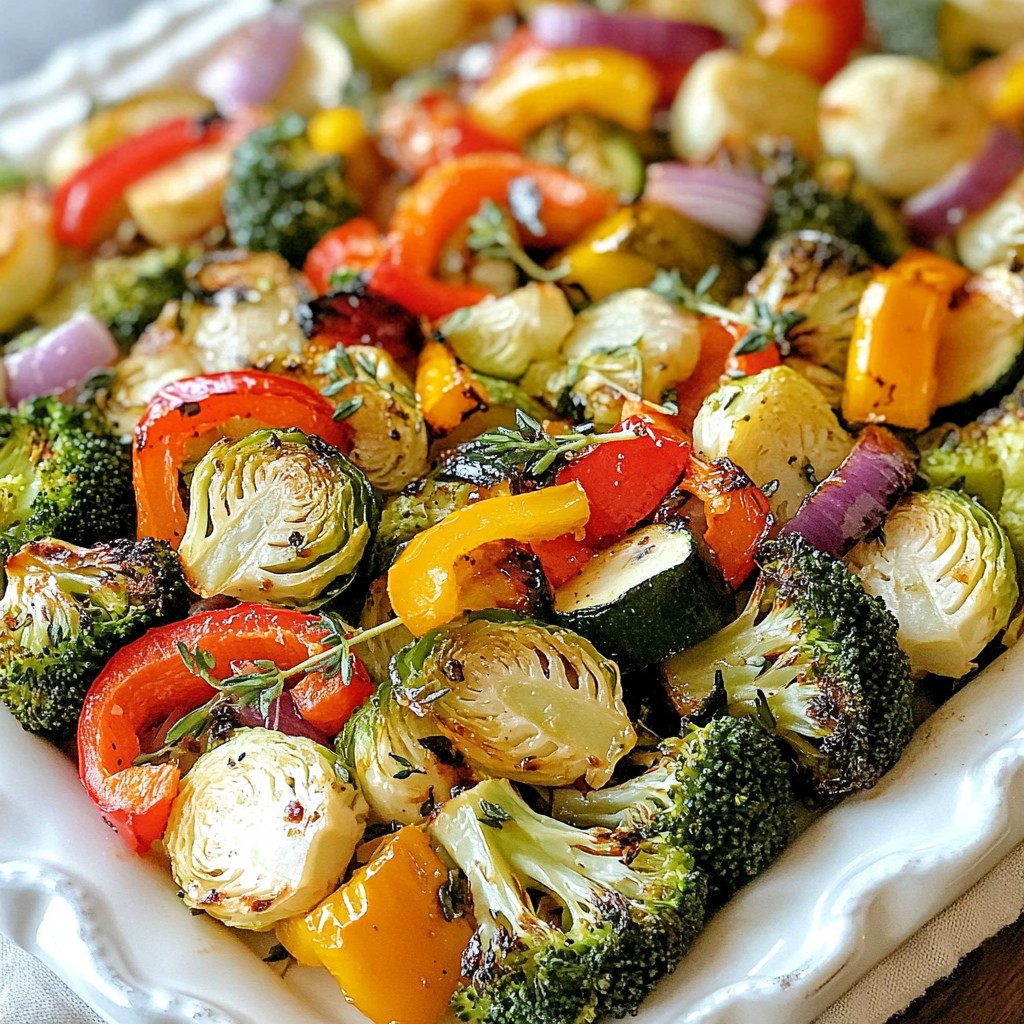
Are you searching for a delicious side dish that elevates your meals? Look no further! Balsamic glazed roasted vegetables offer rich flavor and bright colors, making any plate pop. In this post, I’ll guide you through easy steps, tips, and variations to create a perfect medley of veggies. Let’s dive in and unlock the secret to a flavorful side that will leave everyone asking for more!
Why I Love This Recipe
- Deliciously Balanced Flavors: The combination of balsamic vinegar, honey, and roasted vegetables creates a harmonious blend of sweet and tangy flavors that are irresistible.
- Easy to Prepare: This recipe requires minimal prep time and simple ingredients, making it a perfect choice for busy weeknights or gatherings.
- Colorful and Nutritious: The vibrant colors of the vegetables not only make the dish visually appealing but also pack a variety of nutrients essential for a healthy diet.
- Versatile Side Dish: These roasted vegetables pair well with any main course, from grilled meats to hearty grains, making them a versatile addition to any meal.
Ingredients
List of Ingredients
- 2 cups broccoli florets
- 2 cups Brussels sprouts, halved
- 1 red bell pepper, sliced
- 1 zucchini, sliced
- 1 red onion, chopped
- 4 cloves garlic, minced
- 1/4 cup balsamic vinegar
- 3 tablespoons olive oil
- 1 tablespoon honey
- Salt and pepper to taste
- Fresh thyme leaves for garnish
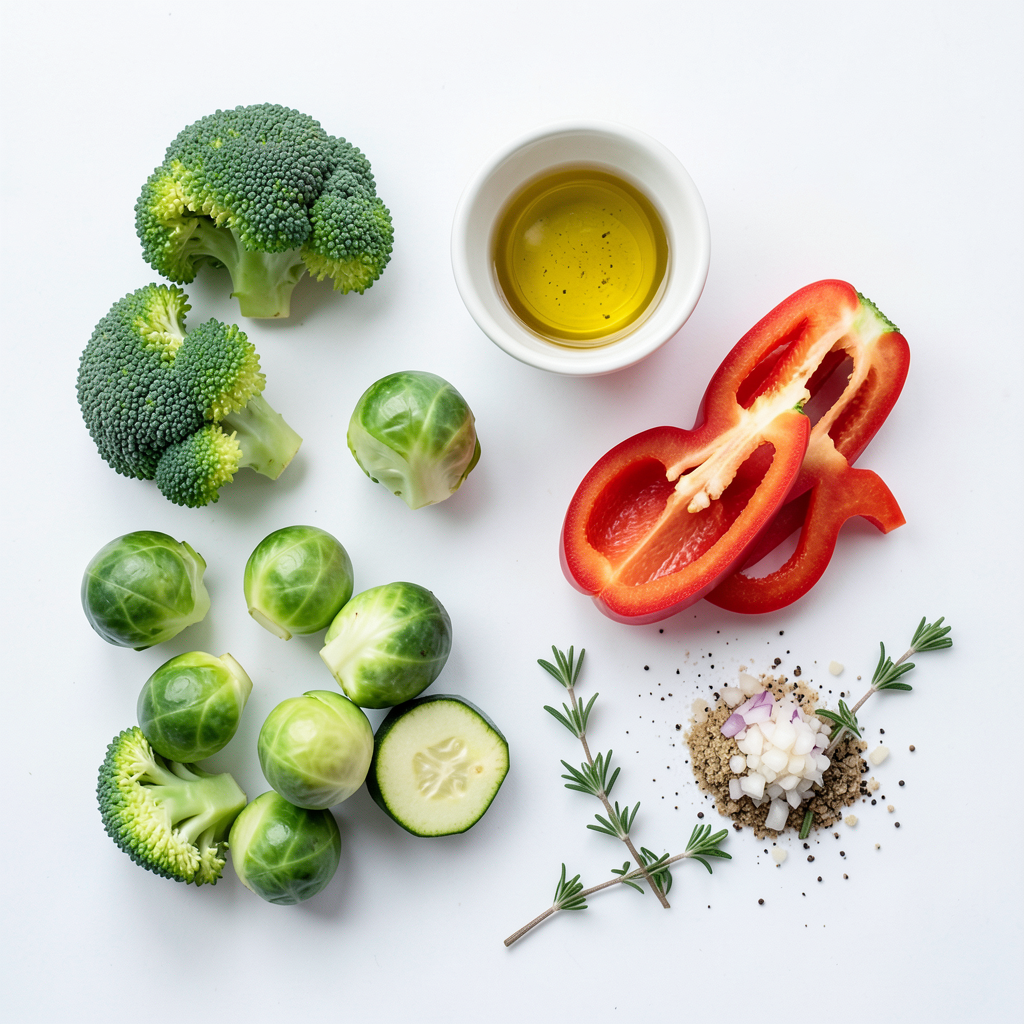
Gather these ingredients to make your balsamic glazed roasted vegetables. The mix of colors and textures makes this dish appealing. Broccoli adds crunch, while Brussels sprouts bring a slightly nutty flavor. The red bell pepper and zucchini offer sweetness and freshness. Red onion gives a bit of sharpness, and garlic adds depth.
The balsamic vinegar is key for tangy sweetness, while olive oil helps the veggies roast nicely. Honey balances the acid in the vinegar. Salt and pepper enhance every bite, while fresh thyme adds a lovely herbal note at the end.
Each ingredient plays a role in flavor and texture. Choose fresh, high-quality vegetables for the best outcome. This dish not only tastes great but also looks beautiful on the plate.
Step-by-Step Instructions
Preparation Steps
Preheating the Oven Start by preheating your oven to 425°F (220°C). This high heat helps the vegetables caramelize nicely.
Mixing Vegetables In a large mixing bowl, add 2 cups of broccoli florets, 2 cups of halved Brussels sprouts, 1 sliced red bell pepper, 1 sliced zucchini, and 1 chopped red onion. Toss these veggies together so they mix well.
Creating Balsamic Glaze In a separate bowl, whisk together 1/4 cup of balsamic vinegar, 3 tablespoons of olive oil, 1 tablespoon of honey, and a pinch of salt and pepper. This glaze adds great flavor and sweetness to the veggies.
Roasting Process
Coating Vegetables with Glaze Pour the balsamic glaze over the mixed vegetables. Toss them until every piece is well coated. This step is crucial for flavor.
Adding Garlic Sprinkle 4 minced garlic cloves over the coated vegetables. Garlic adds a wonderful aroma and taste when roasted.
Roasting Time and Temperature Spread the vegetables evenly on a baking sheet lined with parchment paper. Roast them in the preheated oven for 25 to 30 minutes. Stir halfway through for even cooking. They should be tender and caramelized when done.
Final Steps
Cooling and Garnishing Once roasted, remove the vegetables from the oven and let them cool slightly. This helps the flavors settle.
Presentation Tips Serve the vegetables warm on a large platter. Drizzle any leftover balsamic glaze from the baking sheet over the top. This adds shine and extra flavor. For a lovely touch, garnish with fresh thyme leaves.
Tips & Tricks
Cooking Techniques
How to Achieve Perfect Caramelization To get that nice caramelized look, roast your veggies at 425°F. This high heat helps them brown nicely. Cut your vegetables into even sizes. This way, they cook at the same rate. Toss them with the balsamic mix well to coat.
Ensuring Even Cooking Stir the vegetables halfway through cooking. This step helps them brown evenly. Use a large baking sheet. If they sit too close, they may steam instead of roast. Give them space to breathe and crisp up.
Equipment Recommendations
Best Baking Sheet to Use A heavy-duty baking sheet works best. It can handle high heat without warping. Look for one with a rim to catch any juices. This keeps your oven clean and makes cleanup easier.
Importance of Parchment Paper Using parchment paper is key. It helps prevent sticking and makes cleanup a breeze. You won’t need to scrub the baking sheet after. Plus, it helps the veggies roast evenly.
Enhancing Flavor
Adjusting Sweetness and Acidity You can change the taste by adding more honey or vinegar. If you want it sweeter, add more honey. For a tangy kick, add a splash of vinegar. This lets you control the flavor to match your taste.
Alternative Herbs for Garnish While fresh thyme is great, try other herbs too. Rosemary or parsley can add a new twist. Just sprinkle them on after roasting for fresh flavor. This adds color and taste, making your dish even better.
Pro Tips
- Cut Vegetables Uniformly: Ensure that all vegetables are cut to similar sizes for even cooking and caramelization.
- Use Fresh Ingredients: Opt for fresh vegetables and herbs to maximize flavor and nutritional value in your dish.
- Adjust Seasoning: Taste and adjust the seasoning before roasting; add more salt, pepper, or balsamic vinegar as needed.
- Try Different Vegetables: Feel free to experiment with seasonal vegetables like carrots, sweet potatoes, or cauliflower for variety.
Variations
Seasonal Vegetable Ideas
You can mix things up with different veggies. Adding root vegetables like carrots or sweet potatoes gives a nice touch. These veggies add sweetness and texture. They also roast well and soak up that balsamic glaze.
Using seasonal produce is a smart choice. In summer, try adding corn or eggplant. In fall, butternut squash or parsnips work great. This keeps your dish fresh and exciting.
Flavor Enhancements
To amp up the flavor, think about adding spices or chili for heat. A pinch of red pepper flakes can make your dish pop. If you want a smoky taste, add some smoked paprika.
You can also use different types of vinegar. Apple cider vinegar adds a fruity twist. Rice vinegar is milder and sweet. Experiment with these to find your favorite mix.
Dietary Adjustments
If you want a vegan option, simply skip the honey. You can use maple syrup instead. This keeps the sweetness without any animal products.
For gluten-free needs, this recipe is already safe. Just check your balsamic vinegar to ensure it's gluten-free. You can also reduce the sugar content by using less honey or syrup. Your veggies will still taste fantastic!
Storage Info
Refrigeration Guidelines
- To store leftovers, let the vegetables cool first.
- Place them in an airtight container.
- Your dish will stay fresh in the fridge for up to three days.
Ideal Containers for Storage
- Use glass or plastic containers with tight lids.
- These keep moisture in and help prevent any odors.
Reheating Tips
- The best way to reheat them is in the oven.
- Preheat your oven to 350°F (175°C).
- Bake for about 10-15 minutes until warm.
Maintaining Flavor and Texture
- For the best taste, cover the dish with foil.
- This keeps moisture in and prevents drying out.
Freezing Instructions
- Yes, you can freeze balsamic glazed roasted vegetables.
- Place them in freezer-safe bags or containers.
Thawing and Reheating Frozen Veggies
- Thaw in the fridge overnight for best results.
- Reheat in the oven, just like the fresh ones.
- This will keep the flavor and texture nice.
FAQs
Common Questions
How long should I roast the vegetables? Roast the vegetables for 25 to 30 minutes. This time gives them a nice caramelized texture. Toss them halfway through cooking for even roasting.
Can I use frozen vegetables? Yes, you can use frozen vegetables. However, fresh veggies often taste better. If using frozen, adjust the cooking time. Frozen vegetables may need less time to cook.
Cooking Queries
What can I serve with balsamic glazed roasted vegetables? These vegetables pair well with grilled chicken, fish, or quinoa. They also make a great side for pasta dishes. You can even enjoy them on their own!
How do I know when the vegetables are done? Check for tenderness and caramelization. A fork should easily pierce the vegetables. Look for a golden-brown color on the edges, which shows they are cooked well.
Ingredient Substitutions
What can I substitute for honey? If you need a substitute for honey, try maple syrup or agave nectar. Both options provide sweetness without altering the taste much.
Alternatives for balsamic vinegar? You can use red wine vinegar or apple cider vinegar instead. These options will give a different but tasty flavor. Adjust the amount to match your taste preference.
This guide showed you how to make delicious balsamic glazed roasted vegetables. You learned about the key ingredients, preparation steps, and tips for the best flavor. We also explored variations for different seasons and dietary needs. Proper storage and reheating methods keep your veggies tasty. Remember, these dishes are easy to tweak. Feel free to experiment with flavors and ingredients to make it your own. Enjoy your cooking experience and the delightful meals you create!